

Blog
Smart Curtains: Motors, Switches and What to Plan First
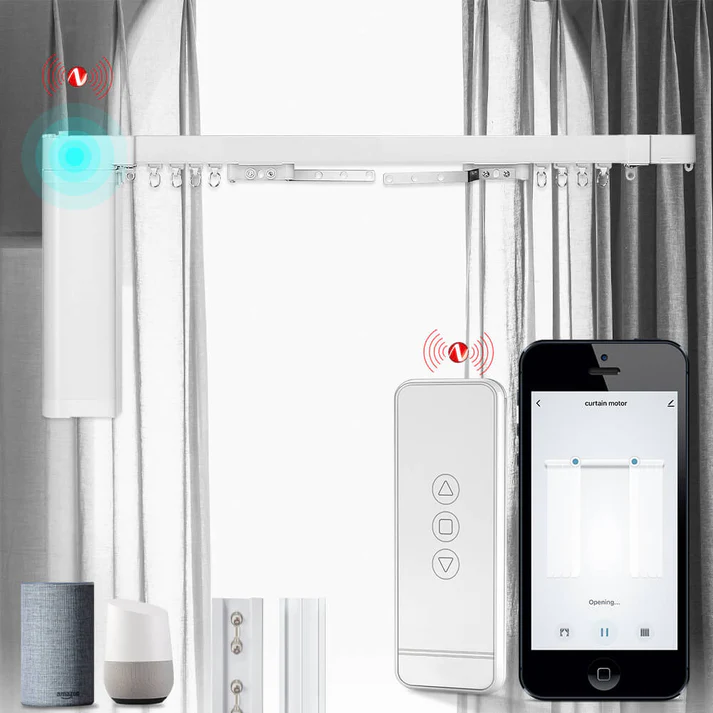
Smart curtains can make everyday routines more convenient, from opening the bedroom curtains in the morning to closing the living-room blinds on a schedule. A reliable setup starts with the physical installation, not the app.
Before buying, identify what you want to automate and which components may be required.
Start with your curtain or blind type
Different products are designed for different systems. A curtain track motor is not the same as a tubular roller-blind motor, and a chain-drive device is intended for a different kind of blind again.
Measure the existing track, tube or chain arrangement and review the product compatibility information. For a new motorized track, consider the required length, mounting position and whether the system can be adapted to your window.
Understand the role of the motor
The motor provides the movement. In a track-based system, it moves the curtain along the track. In a roller-blind system, a compatible tubular motor turns the tube. A chain motor drives an existing bead chain.
The motor alone does not determine which app or voice assistant you can use. Its wireless connection and controller matter too.
Where a smart curtain switch fits
A smart curtain switch or module can control a compatible motorized system through dedicated open, close and stop functions. These controls are different from an ordinary light switch. The wiring and motor type must match the switch or module.
Some products combine wall control with app control. Others use a separate module installed near the motor. Review the installation diagram and electrical requirements before making a choice.
WiFi, ZigBee and RF control
WiFi models typically connect through your router, while ZigBee models require a compatible hub. RF433 refers to radio-frequency control used by some remotes and modules; it does not automatically mean that the product supports every RF remote.
Check whether app control, voice control and a handheld remote are included or require additional components. Compatibility should be confirmed for the complete system, not only one part.
Plan power and installation
Consider where the motor will receive power and whether a cable, outlet or electrical connection is needed. Measure carefully and make sure the curtain can move without obstruction. For hardwired electrical work, follow local regulations and use a qualified electrician where required.
Build a routine that is genuinely useful
Once installed, schedules and scenes can coordinate curtains with other parts of your smart home. You might use a morning opening schedule or an evening scene that adjusts lighting and closes the curtains. Test basic open, close and stop controls before creating complex automation.
The ZigBee Smart Motorized Curtain Track System in our collection combines a motor and track-based approach. For other options, visit the Smart Curtain collection and compare the track, motor, control and hub requirements.